Roland draws a clear distinction in the video between the wallet and the heart. Which one are you chasing after?
A self-censored chronicle of family court dramas, lived by parents who lost all or some visitation with or custody of a child or children based on perjury and/or other false courtroom evidence
Tuesday, June 11, 2013
"It's difficult to be what you don't see." - Daddyless Daughters
Roland draws a clear distinction in the video between the wallet and the heart. Which one are you chasing after?
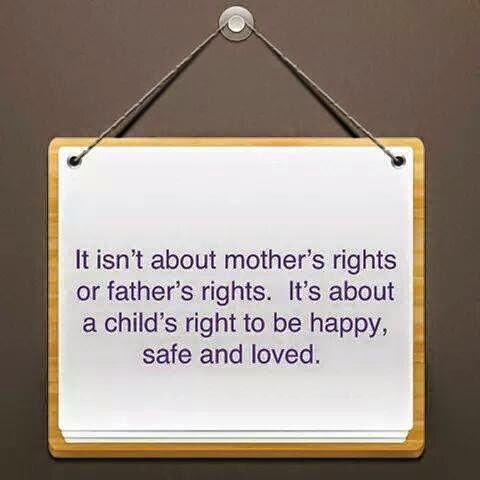
The BLOG "Children's Rights" is not just about Fathers, it's also about Children, Mothers, and Families. 50/50 Shared Parenting is best when there are two fit Parents, for our Children's sake!
If you know all that you're entitled to you can ensure that you are getting what you pay for, and protect your self from being shorted as well. I like to think full justice is equal justice.
I hope you learn from this blog, and remember I am not a lawyer.
You have to do like I did and make your own decisions. Whatever you read here, look it up for yourself then act accordingly.
If there is something I have not covered drop a comment and maybe I can blog about it. Till said requests are made I will attempt to follow the flow of a case, deviating when necessary to make clear some of the more complex aspects encountered in the law.
Thank you all in advance for all your views, comments and support!!
Children's Rights Florida
Monday, June 10, 2013
Make 50/50 Shared Parenting the Presumed Best Interest of Children and Parents
Here is a clear, policy-ready advocacy statement you can use for campaigns, op-eds, legislation, or family-court reform efforts. It is firm, balanced, and centered on children—not ideology.
Make 50/50 Shared Parenting the Presumed Best Interest of Children and Parents
Why 50/50 Shared Parenting Should Be the Standard
1. Children Need Both Parents—Consistently
Extensive research shows that children with substantial time and involvement from both parents experience:
-
Better emotional regulation and mental health
-
Higher academic achievement
-
Stronger identity formation
-
Lower rates of anxiety, depression, and risky behavior
Children do best when neither parent is reduced to a visitor.
2. Equal Parenting Reduces Conflict
Contrary to common belief, shared parenting lowers post-separation conflict by:
-
Removing incentives to “win” custody
-
Encouraging cooperation and accountability
-
Reducing litigation and court overload
When courts start from fairness, parents are more likely to act fairly.
3. Gender Neutrality Promotes True Equality
Children benefit when parenting laws:
-
Treat mothers and fathers as equally capable
-
Reflect modern caregiving realities
-
Eliminate outdated assumptions and bias
Equality in parenting strengthens equality in society.
4. Long-Term Outcomes Improve for Everyone
Shared parenting is linked to:
-
Stronger lifelong parent–child bonds
-
Better co-parenting relationships
-
Improved child outcomes well into adulthood
-
Reduced social and economic costs tied to family breakdown
This is preventive public policy, not just family law.
Important Safeguards
A 50/50 standard must include clear exceptions:
-
Documented abuse or neglect
-
Serious substance abuse or untreated mental illness
-
Situations where shared parenting would clearly harm the child
The Principle Is Simple
When both parents are fit and loving, children deserve both—fully, consistently, and without bias.
Make 50/50 shared parenting the starting point, not the uphill battle.
A baby is born... Parents are created at this moment too. That creation process (when parents are born) is special and important. Human rights are linked to every aspect of Parenting. To write any laws to reflect gender preference is to define WHICH parent receives more parenting rights. This is NOT a construct of Equality, it is the construct of social engineering.
Culture is evolving and law is progressive.
Acceptance of Equality
Practice of Equality
Enforcement of Equality

Of course there is people who stand in the way of Progression and Changes in Culture.
The fight is not simply your case... That is your personal battle... and it is extremely important because when you stand up for your rights not just as a father, but as a Human being and Parent. You are taking a stand in society and showing people that you are not branding yourself in the image that society has cast shadows onto. Fatherhood... As a 'Father' you might have strength, but in court or to Mothers, you might simply trigger stereotypes on a mental & Emotional level. As a ' Parent ' you are Equal. As a Human you are Equal.
If you have read finalized court documents you might notice that words can define you. We all know that words are not truly what defines who you are, ...but on paper... to the courts... Words can limit your Human Rights. Stigma and Public Opinion are either enemies or valiant defenders of your case. Fight for your cause! and when you do, do it as a Human being fighting for Equal rights as a Parent.
Write your state reps and Write about this. Whatever wrongs have been inflicted against you, writing the state and your government about Equal rights for Parents (leaving gender descriptive words to a minimum or out completely) is the first steps in shifting culture and society into a more Equal and positive future for all parents. Imagine all the young parents who will come after us... We need to stand together and we will be stronger for it.
SAMPLE LETTER
Remain an Equal Parent to your Child!

Related articles
Brookings Scholar Has an Idea - Shared Parenting!
Sound evidence on Human Rights - podcast exploring new perspectives on advocacy and cutting-edge research.
UN: Jail Parents Who Spank Their Children
Enact Uniform Parenting Guidelines in Family Law
Extraordinary Lawsuit Exposes Human Rights Violations in U.S. Courts
Children Lost in Divorce
Apply Civil Rights to Family Law - End the Dysfunctional Family Court System
American Fathers 4Change on Causes.com
~~ NEW SURVEY ~~ Male Victims of Domestic Violence
Language and the Law - Simple Doesn't Mean Stupid
Sunday, June 09, 2013
Depriving your children of love is abuse. So why do it?
The question then arises: Why would a parent deprive their child of love, knowing that it is harmful?
The answer is complex and multifaceted, as there are many factors that can contribute to a parent’s inability or unwillingness to provide love. Let’s explore some of the reasons behind this heartbreaking phenomenon.
1. Unresolved Trauma and Emotional Baggage
One of the most common reasons why a parent may be unable to offer love is because they themselves have not experienced healthy love in their own lives. Many parents, especially those who experienced abuse or neglect as children, struggle to give love in the way their children need.
-
Emotional numbness: For parents who were emotionally neglected or abused in their own childhoods, they may not know how to express love in a healthy, nurturing way. The emotional numbness they developed as a survival mechanism can make it difficult for them to connect with their children in the way they need.
-
Generational trauma: Generational trauma is the transmission of trauma from one generation to the next. Parents who were deprived of love or faced emotional abandonment may repeat these patterns with their own children, often unknowingly. Without proper healing or self-awareness, these parents may struggle to break the cycle of neglect or emotional distance.
For these parents, the lack of love they express is not necessarily intentional, but rather a byproduct of their own unhealed wounds.
2. Mental Health Struggles and Emotional Unavailability
Mental health issues such as depression, anxiety, and personality disorders can significantly affect a parent’s ability to be emotionally present for their child. Some common mental health challenges that can lead to emotional unavailability include:
-
Depression: Parents who suffer from depression may be so overwhelmed by their own emotions that they are unable to focus on or respond to their child’s emotional needs. They might feel emotionally exhausted, numb, or disconnected, which makes it hard to provide the nurturing care a child needs.
-
Anxiety: Parents struggling with severe anxiety may focus so intensely on their own worries that they cannot offer their children the emotional support and attention they deserve. In extreme cases, anxiety can cause a parent to withdraw or become overly controlling, creating an emotionally distant or tense home environment.
-
Personality disorders: Disorders such as narcissistic personality disorder or borderline personality disorder can complicate the ability to form healthy, loving attachments. Narcissistic parents, for instance, may prioritize their own needs and desires over their child's emotional well-being, leading to neglect or emotional manipulation.
In these cases, the parent’s mental health challenges may prevent them from engaging in positive, loving interactions with their child. This doesn’t necessarily mean they don’t love their child, but their ability to express that love is severely impaired.
3. Toxic Parenting Styles and Lack of Emotional Awareness
Some parents may unintentionally deprive their children of love due to their own toxic parenting behaviors or a lack of emotional intelligence. These behaviors can arise from ignorance or a failure to recognize how their actions are affecting their child’s emotional development.
-
Authoritarian Parenting: This rigid and controlling parenting style emphasizes obedience, rules, and discipline but often lacks warmth and affection. Authoritarian parents may set high expectations without providing emotional support or love. The focus is on control rather than connection, leading to children who may feel unloved or emotionally abandoned.
-
Neglectful Parenting: Parents who are neglectful (whether emotionally or physically) may be physically present but emotionally unavailable. They fail to meet their child’s emotional needs, offering little affection, praise, or encouragement. Children raised in these environments often feel invisible or unimportant.
-
Over-controlling and critical behavior: Some parents, particularly those who were themselves raised in highly controlling environments, may impose strict rules without fostering emotional closeness. They may criticize their child’s behavior or achievements instead of nurturing them. The child, in turn, may struggle with self-esteem and feel disconnected from their parent.
While these parents may still care about their children, their parenting style is emotionally harmful and does not provide the warmth or love necessary for healthy development.
4. External Stressors and Life Circumstances
External pressures, such as financial stress, marital problems, or a demanding career, can also impact a parent’s ability to show love to their children. When parents are overwhelmed by life’s challenges, they may unintentionally withdraw or become emotionally unavailable.
-
Financial hardship: Parents who are struggling to make ends meet may be so consumed by the pressures of providing financially that they become emotionally distant. The stress of worrying about bills, job security, and other financial concerns can take a toll on a parent’s mental health, making it harder to provide the emotional connection children need.
-
Marital conflict or divorce: Parents who are experiencing marital issues, particularly those going through a divorce or separation, may become emotionally withdrawn or focused on their own needs, leaving their children feeling neglected. They may be too preoccupied with their own emotional turmoil to adequately nurture their children.
-
Work-related stress: Parents who work long hours or are constantly stressed at work may be physically present at home but emotionally unavailable. Fatigue, burnout, or job-related frustrations can drain the emotional energy a parent has to give, leading to a lack of connection with their child.
These external stressors often contribute to emotional neglect. Though the parents may still love their children, their capacity to show that love becomes limited by their own stress and struggles.
5. Intentional Neglect or Emotional Abuse
In some unfortunate cases, intentional emotional abuse or neglect may occur. This can be the result of severe anger, resentment, or toxic belief systems held by the parent. In these situations, the deprivation of love is a deliberate attempt to control, manipulate, or hurt the child. This can manifest in a range of behaviors, from verbal abuse to withholding affection as a form of punishment.
-
Parental alienation: Sometimes, one parent may intentionally try to alienate the child from the other parent, using emotional manipulation or coercion to turn the child against the other parent. This can involve not only withholding affection but also planting seeds of distrust and fear in the child.
-
Punishment by neglect: In extreme cases, a parent may consciously withhold love as a form of punishment, believing that it will make the child more obedient or compliant. This can have devastating consequences for the child’s sense of self-worth and emotional development.
In these instances, the deprivation of love is a form of abuse, and it can cause long-lasting emotional damage to the child.
So, Why Do It?
The simple answer to the question, “Why do it?” is that no parent sets out to intentionally harm their child. In many cases, parents are unaware of the damage their behavior is causing, or they may be acting out of their own unresolved pain, stress, or emotional limitations. They may not realize that their actions—or inaction—are depriving their child of the love and emotional support that is essential for healthy development.
However, regardless of the reasons behind it, depriving a child of love is indeed a form of abuse. Children need love to thrive, to develop healthy emotional connections, and to grow into emotionally stable adults. Parents must recognize the profound impact their behavior has on their children and take steps toward healing, whether it’s seeking therapy, learning about healthy emotional communication, or working to break harmful cycles of neglect.
Conclusion: The Path to Healing and Change
While there are many complex reasons why a parent might deprive a child of love, the good news is that healing is possible. Parents who recognize their own emotional struggles or toxic patterns can take proactive steps toward improvement. Therapy, self-reflection, and support systems can help parents become more emotionally available, offering their children the love and support they need to thrive.
Children, especially those who have experienced emotional neglect, can also heal through therapy, strong supportive relationships, and environments that encourage emotional expression and self-esteem.
Deprivation of love is devastating—but awareness, support, and change can help parents and children break free from cycles of emotional harm and foster healthier, more loving relationships.
Post by Parental Alienation Awareness Organization - PAAO.
The BLOG "Children's Rights" is not just about Fathers, it's also about Children, Mothers, and Families. 50/50 Shared Parenting is best when there are two fit Parents, for our Children's sake!
If you know all that you're entitled to you can ensure that you are getting what you pay for, and protect your self from being shorted as well. I like to think full justice is equal justice.
I hope you learn from this blog, and remember I am not a lawyer.
You have to do like I did and make your own decisions. Whatever you read here, look it up for yourself then act accordingly.
If there is something I have not covered drop a comment and maybe I can blog about it. Till said requests are made I will attempt to follow the flow of a case, deviating when necessary to make clear some of the more complex aspects encountered in the law.
Thank you all in advance for all your views, comments and support!!
Children's Rights Florida
Saturday, June 08, 2013
Family Courts Must Stop Reinforcing Alienation
Parental Alienation: The Hidden Harm Courts Must Confront
In recent cases I’ve handled, the outward behavior of an alienating parent often appears harmless — even reasonable — yet the impact on the parent-child relationship is devastating.
Take this example: a mother “delivers” her three sons, ages 15, 13, and 11, to the hallway outside her apartment when their father arrives for parenting time. The boys refuse to go. The mother shrugs, saying, “I’m sorry, they just don’t want to go with you,” and ushers them back inside.
Her attorney asks, “What else is she supposed to do?”
The answer is simple: the children would not have reached this point without the mother’s influence. Alienation does not happen in a vacuum. Undoing the damage is extraordinarily difficult, because once children are conditioned to reject a parent, even neutral settings — like a school pickup — may not break the cycle.
The Brutality Beneath the Surface
What looks like passive compliance is, in reality, brutal manipulation. The mother has subtly — or aggressively — conveyed to the children that time with their father is unnecessary, even undesirable. This is parental alienation: a process that erodes affection and convinces children that one parent is irrelevant.
Alienating parents often justify their actions by pointing to alleged flaws in the other parent: anger, laziness, dishonesty, infidelity, even violence. But children raised by imperfect parents still love them, seek their affection, and cherish their presence. A truly “bad” parent drifts away naturally. Alienation is not needed. The fact that the targeted parent is deeply involved is precisely why alienation must be manufactured.
Remedies That Actually Work
So, what can be done? Courts often hesitate, asking what the alienating parent could do differently. The first step is accountability. If a father must bring the issue to court, the mother should pay his attorney fees. Without consequences, alienation continues unchecked.
But financial penalties alone rarely suffice. Realistically, only three remedies have proven effective:
Financial sanctions — awarding attorney fees or offsetting child support.
Incarceration — drastic, but often necessary when fines fail to deter alienation.
Change of custody — the most effective remedy, giving children the chance to rebuild their relationship with the alienated parent.
Anything short of these measures leaves the alienating parent in control, and the children deprived of what they need most: a genuine bond with both parents.
Courts Must Stop Reinforcing Alienation
Too often, courts craft “band-aid” solutions that reinforce the problem. They delay meaningful remedies until the alienated parent is financially drained and unable to continue the fight. By then, the parent is erased from the child’s life. Both lose.
Attorneys representing alienated parents must educate the courts. Judges need to understand that alienation is not a minor inconvenience — it is internal bleeding in the parent-child relationship. Superficial remedies will not stop it. Strong, decisive action must be taken early, before the damage becomes irreversible.
The Call to Action
Parental alienation is one of the most insidious forms of child abuse. It thrives in silence, cloaked in seemingly benign actions. Courts must recognize it for what it is and respond with remedies that truly protect children’s right to both parents. Anything less is not justice — it is complicity.
Millions of Daughters do not have contact with their biological fathers in the U.S and around the globe, and can not benefit from the positive influences this core relationship provides.3-Types of Father-Daughter Alienation:Its impact on Paradigm Development By Karen Davis-Johnson, M.A.,
Editor for The Journal of Father Daughter Communications |